Projections in the 2025 Global Report on Food Crises (GRFC) show that at least 6.8 million people, representing 33 percent of Malawi’s population, are struggling to meet their basic needs, especially finding food.
Out of the 6.8 million, the report shows that 5.7 million were in Integrated Food Security Phase Classification (IPC) phase three, meaning that they faced a more severe level of acute food insecurity, with households experiencing significant limitations in food access and coping strategies.
Reads the report in part: “An analysis on Malawi showed that while some macroeconomic impacts, especially losses in foreign exchange, may be mitigated by policy measures, the broader decline in welfare is likely to have far-reaching effects, including increases in poverty and malnourishment.
“Reductions in official direct assistance—and the associated foreign exchange—also pose broader macroeconomic risks, undermining fiscal capacity and threatening currency stability and access to essential imports.”
Like in other countries, the report said in Malawi, financial allocations primarily target the symptoms of food crises, rather than mitigating their drivers or the structural factors that increase vulnerability and limit capacities to recover. But this has been true since 2018, with the report indicating that a protracted food crisis in Malawi has been in all nine editions of the GRFC.
The report comes on the back of preliminary crop production estimates for the 2024/25 agriculture season indicating that Malawi faces another maize deficit with data showing that 2 962 620 metric tonnes (MT) of the staple grain will be harvested against a national requirement of 3.5 million MT.
Reacting to the report, agriculture extension specialist Leonard Chimwaza stressed the need to maximise production from mega farms. He said prudence in the selection of productive farmers, timely engagement of input suppliers, adoption of mechanisation, timely distribution of inputs and total adoption of climate-smart agriculture practices can help turnaround the fortunes.
He said: “Government should strengthen policies that promote climate smart agriculture, diversifying crop
varieties, irrigation and smallscale livestock production. We need to improve storage systems in order to ensure that food supplies last. “In the short term, Admarc must ensure steady supply and have a balanced distribution
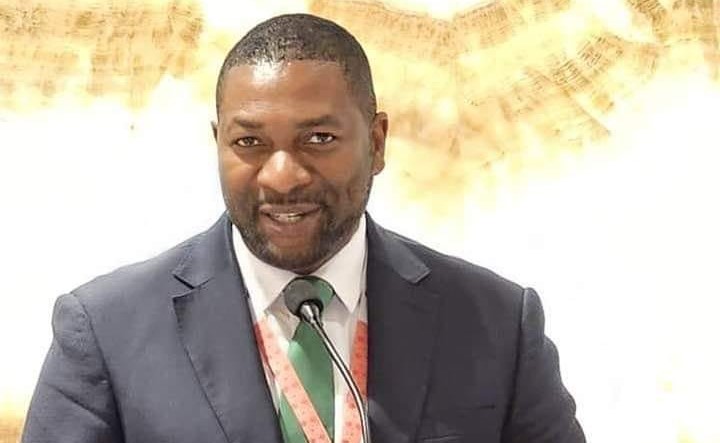
matrix which could assist in ensuring steady availability of the maize in its depot across the country. Relief maize is also key for those who cannot afford to buy.” In an interview, Minister of Agriculture Sam Kawale conceded that the challenges of food security are real and said government was taking bold steps to find long-term solutions to have a hunger-free future.
He said in the short-term, the Department of Disaster Management Affairs (Dodma) will continue distributing free food to vulnerable households, and are expanding the programme to ensure no one is
left behind. Kawale also said the Agricultural Development and Marketing Corporation (Admarc) has received increased funding to purchase and sell maize at subsidised prices, ensuring affordability for all Malawians.
He said: “We are investing close to K100 billion in irrigation projects this year alone. This includes fertiliser, seeds and pest control support for farmers in irrigation schemes.” Produced by the Food Security Information Network, the report is supported by such institutions as the European Union (EU), World Food Programme, Unicef and Food
and Agriculture Organisation.